
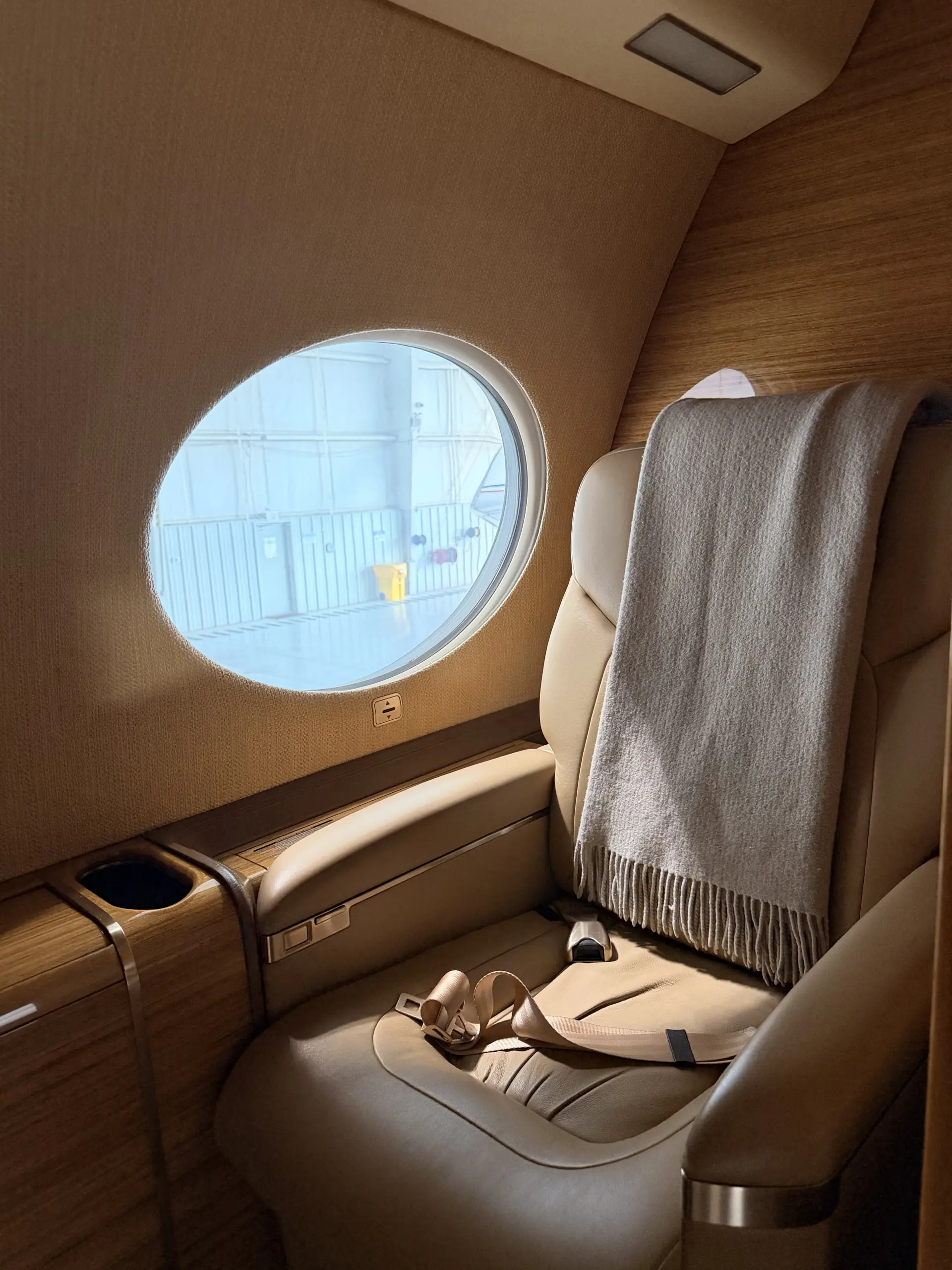
The leather in an aircraft cabin looks like the leather in a luxury car, and that resemblance ruins more interiors than spills ever do. Aviation leather is a different material with different rules — and the biggest threats to it come in bottles marketed as care products.
Shiny leather isn’t clean leather
Start with the most common misconception: shine. Properly maintained aircraft leather has a matte, natural appearance. When a seat develops a gloss, what you’re usually looking at is buildup — body oils, sunscreen residue, or the silicone left behind by shine-in-a-bottle conditioners. That layer isn’t protecting the hide; it’s sitting on top of it, attracting more soil and slowly working into the finish, where it accelerates cracking and wear. If a cabin’s seats gleam, they’re overdue for a proper cleaning, not proof of one.
Aviation leather is not automotive leather
The second misconception is that any quality leather product will do. Aircraft leather is deliberately lighter and thinner than automotive hides — weight matters at altitude — and it carries fire-retardant treatments required by aviation safety standards. That treatment layer is exactly what many automotive and household leather products compromise. The chemistry that makes a car seat supple can strip an aviation finish, and once that protective treatment is gone, the hide underneath ages fast.
This is why “we’ll just have the car detailer do the cabin” is a genuinely expensive sentence. The products aren’t interchangeable, and the damage doesn’t announce itself until the finish is already failing.
What’s actually attacking your seats
- UV through the windows. Cabin windows focus sun on the same seat panels every flight, fading and drying the finish.
- Heat cycling. Cabins bake on the ramp and cool at altitude, over and over. Leather expands, contracts and slowly loses its suppleness.
- Contact soiling. Hands, sunscreen, denim dye and clothing oils embed into the finish on armrests, headrests and side bolsters — the wear pattern every operator recognizes.
- Wrong-product cleaning. Harsh cleaners strip the protective finish along with the dirt, trading one flight’s cleanliness for years of the hide’s life.
What proper care looks like
Think of leather care as preventive maintenance, not cosmetics. The correct process does two things in order: it removes contaminants without disturbing the factory finish, then it protects the surface against the next months of UV and contact — using products formulated for aviation interiors. Done on a sensible interval, this keeps the original texture and color, extends the service life of seats and panels, and pushes expensive re-upholstery years into the future.
It also protects value beyond the cabin. Interior condition is one of the first things a buyer’s inspection notes on any airframe; seats that have been maintained rather than shined read as an aircraft that’s been cared for everywhere else too.
The takeaway
Aircraft leather rewards restraint: gentle, aviation-safe cleaning, real conditioning instead of silicone shine, and protection applied before damage shows. Our interior detailing service treats leather exactly that way — cleaned, conditioned and inspected under cabin lighting — usually alongside the wood, headliner and carpet that share the same cabin environment.