
Every protective product for aircraft paint is making the same promise: a sacrificial layer between the finish and the world. The difference is how long the layer lasts and what it can stand up to. Wax makes the promise for weeks. A professional ceramic coating makes it for years — and that changes the economics of keeping an aircraft clean.
What a ceramic coating actually does
A ceramic coating is a semi-permanent layer that bonds chemically to the surface — paint, brightwork or composite — rather than sitting on top the way wax does. Once cured, it resists the specific abuses aircraft surfaces take: UV degradation, jet fuel and exhaust staining, oxidation, de-icing fluid, even ice adhesion. Contaminants that would etch into bare paint sit on the coating instead, where they rinse off with far less effort.
That last point is the one operators feel week to week. A coated airframe stays cleaner longer, cleans faster when it’s serviced, and needs less aggressive scrubbing — which itself extends paint life, since abrasion is one of the things that ages a finish.
Why we apply System-X Max G+ specifically
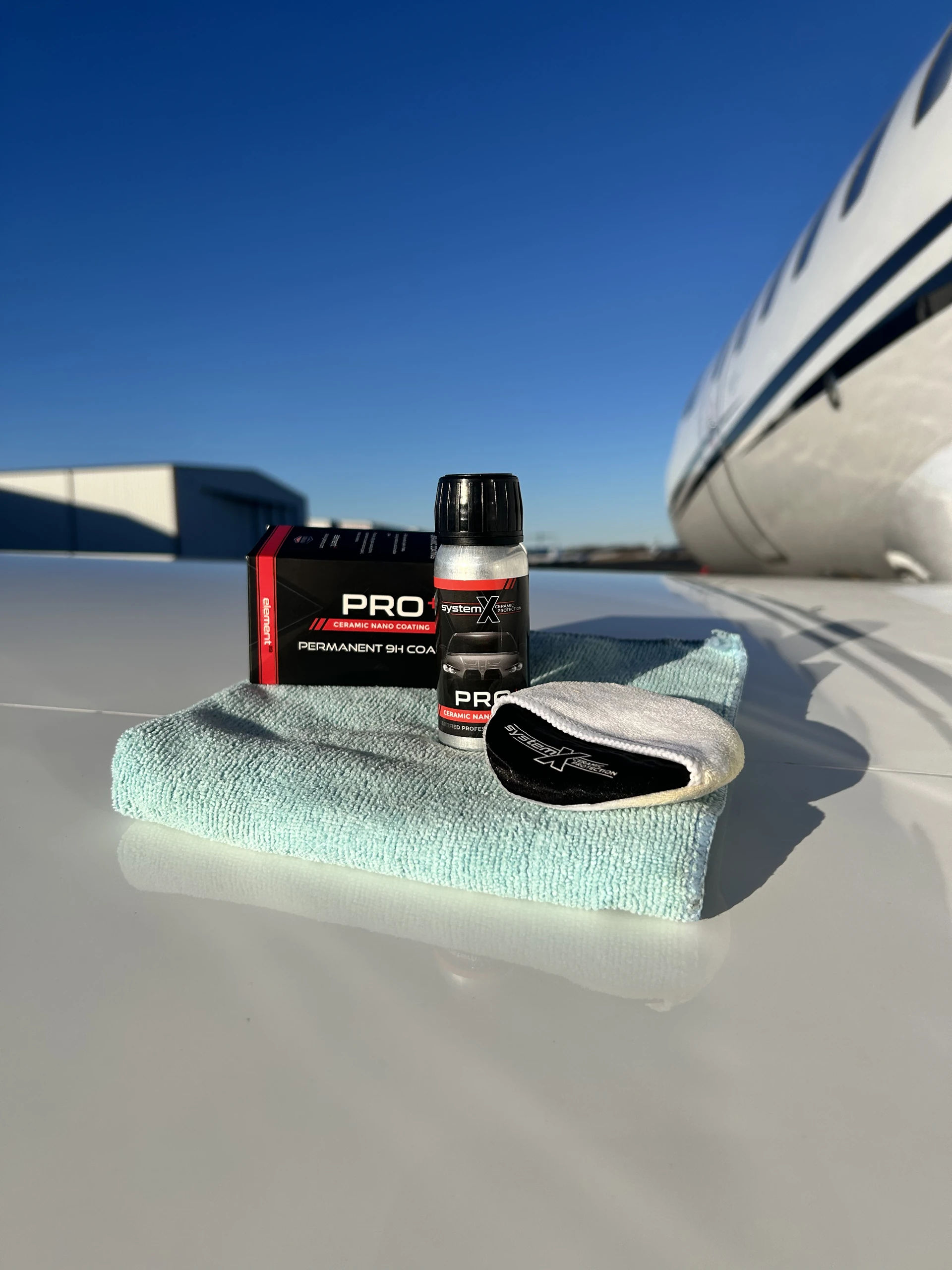
Ceramic coatings are an unregulated marketing category — anything in a bottle can call itself one. Our standard is narrower: System-X Max G+ is one of the only ceramic coatings in the world approved by Boeing for exterior aircraft use, which means it has passed aerospace certification testing rather than a marketing department. It’s a 10-year product, applied by our team as a five-stage process: wash, full decontamination, paint inspection, controlled application, and a curing evaluation before the aircraft returns to service.
The measurable results: deeper gloss than freshly corrected bare paint, extreme chemical resistance to turbine soot and de-icing fluid, and durability that wax and polymer sealants don’t approach.
Who the investment makes sense for
- Owners protecting paint value on an aircraft they’ll fly for years — the coating outlasts many ownership cycles of wax by itself.
- Charter and fractional fleets, where faster turnarounds and less labor per wash compound across every airframe and every week.
- Corporate flight departments that need the aircraft presentable on any given morning without a wash crew on standby.
- Brokers and sellers, because deep, protected gloss photographs like new paint — and buyers notice.
Coating an aircraft the right way
One honest caveat: a ceramic coating locks in whatever surface it’s applied over. Coating oxidized or swirled paint preserves oxidized, swirled paint under a glossy shell. That’s why paint correction comes first on any airframe that needs it, and why the prep stages of the application matter as much as the product. Done in the right order, the coating locks in a flawless finish; done cheap, it embalms a tired one.
The takeaway
Wax is a subscription; a certified ceramic coating is infrastructure. For an asset that lives outdoors, flies through everything, and is judged on its finish every time it parks on a ramp, a Boeing-approved coating is one of the few detailing investments that pays for itself in both preserved paint and saved labor — for up to a decade per application.