
Aircraft Disinsection — WHO‑Compliant, Nationwide
Certified, WHO-compliant residual aircraft disinsection for departures to destinations that require it — mobile, nationwide, with a full documentation package on every job. It’s the specialty we’re known for, run through our dedicated division, Pure Aircraft Disinsection.
Country requirements & documentation — pureaircraftdisinsection.com →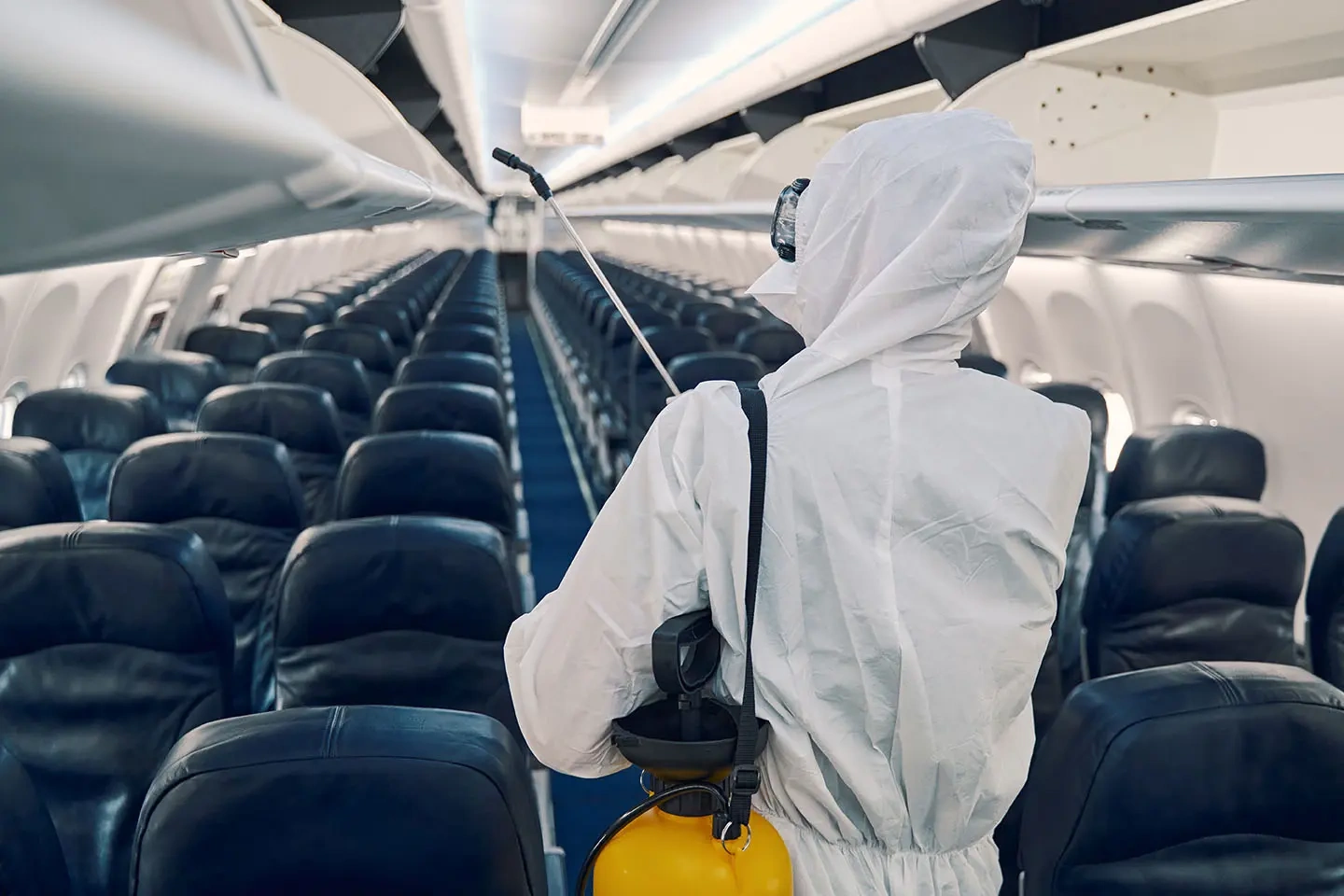
Residual cabin treatment in progress — Permethrin 2% at the WHO-recommended rate, under 30 minutes on the aircraft.
Compliance, handled correctly
Many countries legally require an aircraft cabin to be treated for insects before arrival. Pure Aviation Detailing performs certified residual disinsection using a Permethrin 2% solution applied at the WHO-recommended rate — a single treatment that protects for up to 60 days and takes under 30 minutes on your aircraft. We come to your aircraft anywhere in the US and hand you a complete, WHO-compliant documentation package for your trip.
Why it matters: Disinsection is about compliance and confidence. Get it wrong and an aircraft can be held, treated by authorities on arrival, or turned around. We handle it correctly, discreetly and nationwide — with the paperwork to prove it.
What’s included
- Certified residual disinsection — Permethrin 2% applied at the WHO-recommended rate
- Up to 60 days of protection from a single treatment
- Fast application — typically under 30 minutes on the aircraft
- Complete WHO-compliant documentation on every job (WHO Certificate of Residual Disinsection, company affidavit with official seal, DAFF certificate, and country-specific forms)
- Mobile and nationwide — we come to your aircraft anywhere in the US
- Protection against mosquito vectors that carry malaria, dengue, Zika and yellow fever
Where disinsection is required — and what each country expects.
Under the WHO’s International Health Regulations and ICAO Annex 9, a growing list of countries requires arriving aircraft to be disinsected to prevent the spread of mosquito-borne disease — dengue, Zika, malaria and yellow fever. Every country below accepts certified residual treatment, which is exactly what we perform. Egypt and several other destinations also require it — ask us about your specific route.
| Country | Requirement | Notes for US operators |
|---|---|---|
| Italy | Required for aircraft arriving from countries with Aedes aegypti mosquitoes — the US is designated a risk zone | Residual treatment strongly recommended (aerosol acceptance varies by airport); enforcement tightened significantly in 2025 |
| Greece | Mandatory for all aircraft — private, commercial and military — arriving from mosquito-risk countries, including the US (effective September 18, 2025) | Certificate of Residual Disinsection per ICAO Annex 9, Appendix 4; disinsection details must also appear in the General Declaration (AIC 03/25) |
| Australia | Disinsection on every internationally arriving aircraft, without exception | Regulated by DAFF; residual treatment is accepted only under an operator’s formal arrangement with DAFF, with us performing it as your listed contractor — see the note below |
| New Zealand | Disinsection on all internationally arriving aircraft | Regulated by MPI; residual requires a formal operator arrangement with MPI (a DAFF Approved Arrangement also covers NZ); 60-day validity can cover dual itineraries |
| Jamaica | Disinsection on all inbound international flights | Residual treatment explicitly accepted; listed in the US DOT country registry |
| Chile | Disinsection on all inbound international flights | South America’s most common business aviation destination |
| Fiji | Disinsection on all internationally arriving aircraft | Residual treatment accepted as a compliance option |
| Malaysia | Required at Sultan Abdul Aziz Shah (WMSA) and other international entry points | Arrival inspections verify certificates; confirm requirements for your specific entry airport |
| Barbados | Disinsection on all inbound international flights | Documentation must be carried aboard and available for inspection |
| Cook Islands | Disinsection on all inbound international flights | Often paired with Australia / New Zealand itineraries |
Requirements change — Italy and Greece both tightened enforcement in 2025. We confirm the current rules for your exact route and entry airport before every treatment.
Residual disinsection for AU/NZ requires an approved operator — and we work under your approval.
Australia and New Zealand now accept residual disinsection only when it is performed under a formal arrangement the operator — the airline or charter company — holds with DAFF (Australia) and/or MPI (New Zealand). Service providers cannot hold this approval themselves; approved operators may subcontract the treatment to a company like ours, listed as their contractor. This is governed by the Schedule of Aircraft Disinsection Procedures for Flights into Australia and New Zealand, V5.3, which adopts the WHO Aircraft Disinsection Methods and Procedures, 2nd Edition. An operator holding a DAFF Approved Arrangement does not need a separate compliance agreement with MPI.
If your operation isn’t approved yet, we’re happy to partner with you and provide everything needed to obtain that certification — once it’s in place, we can perform residual disinsection for your Australian and New Zealand operations as your listed contractor. For AU/NZ disinsection matters, MPI can be reached directly at DisinsectionMatters@mpi.govt.nz.
A single residual treatment covers every international departure for 60 days.
Residual disinsection is valid for 60 days from the date of treatment. Fly Italy this week, Australia next month, Chile after that — one treatment and one documentation folder covers all of it. Timed correctly, it even covers dual Australia / New Zealand itineraries (performed under your operator’s DAFF / MPI arrangement, with us as your listed contractor).
Our process
Confirm requirements
We identify exactly which disinsection method and documentation your route requires.
Schedule around departure
Residual treatments are applied in advance; pre-flight methods are timed to your trip.
Treat the cabin to standard
Our technicians apply the approved product safely and thoroughly, cabin to cargo.
Hand off compliant paperwork
You leave with the documentation crews and authorities expect.
Aircraft we service
We perform aircraft disinsection (nationwide) on everything from piston singles and turboprops to helicopters, super-midsize and heavy jets — business jets are our specialty, but we treat every airframe with the same care.
Four documents, issued on every job.
Schedules change. Rather than scrambling for paperwork when a route shifts, you receive the complete package covering every destination with active requirements — immediately after treatment, whatever your current flight plan.
WHO Certificate of Residual Disinsection
The primary document, following ICAO Annex 9, Appendix 4 — the internationally recognized standard. It records treatment date and expiration, aircraft registration, product used, application method and technician credentials. When health officials board, this is the document they ask for.
Company affidavit with official seal
A signed legal declaration bearing our official seal — who performed the treatment, what product was used, when and where. An extra layer of provider verification most operators don’t get with a certificate alone.
DAFF / MPI Appendix A certificates
Australia’s Department of Agriculture and New Zealand’s Ministry for Primary Industries require their own supplementary Appendix A form, which we issue with every treatment. Note: for AU/NZ, residual disinsection must also be performed under your operator arrangement with DAFF or MPI, with us as your listed contractor — see the Australia / New Zealand note above.
ICAO General Declaration guidance
Greece requires disinsection details in the aircraft’s General Declaration (Annex 9, Appendix 1), with copies retained for three months under AIC 03/25. We walk your crew through exactly what to enter before arrival.
Keep the folder aboard for the full 60-day window, and check that the expiration date clears your last planned international departure — we note it clearly on every certificate.
Applied to WHO protocol, safe for your cabin.
With all passengers and crew off the aircraft, a Permethrin 2% residual solution is applied with a compression sprayer and flat-fan nozzle at WHO-specified rates — cabin carpeting through cargo holds, with food-preparation areas excluded per WHO protocol. On a mid-to-large-cabin business jet the spraying itself takes five to twenty minutes; the aircraft then rests closed briefly so the treatment sets before ventilation.
Permethrin 2% is confirmed safe for use in aircraft cabins by the World Health Organization. Because treatment happens with the cabin empty and the aircraft is ventilated before anyone boards, passengers and crew are never exposed to airborne product — and there is no in-flight spraying, ever.
We go where the aircraft is.
Texas, California, New York, Florida, Louisiana and everywhere between — we’ve treated aircraft across the country, handling all travel logistics on our end. Within driving range we can typically be on your ramp within one to two days of confirmation; where flying is faster, two to three days. A week of lead time is ideal, but tight departures are our specialty — tell us your wheels-up time and we’ll work to it.
Every treatment is performed by our certified team — never a subcontractor or franchisee — so the standard on your aircraft is the same one our name is on.
Pure Aircraft Disinsection — pureaircraftdisinsection.com
Aircraft disinsection runs through our specialist division, Pure Aircraft Disinsection — “Certified Aircraft Disinsection: we come to your aircraft, anywhere in the US.” For full method details, the complete country requirements, the documentation package and to request disinsection specifically, visit the dedicated site.
Visit Pure Aircraft Disinsection →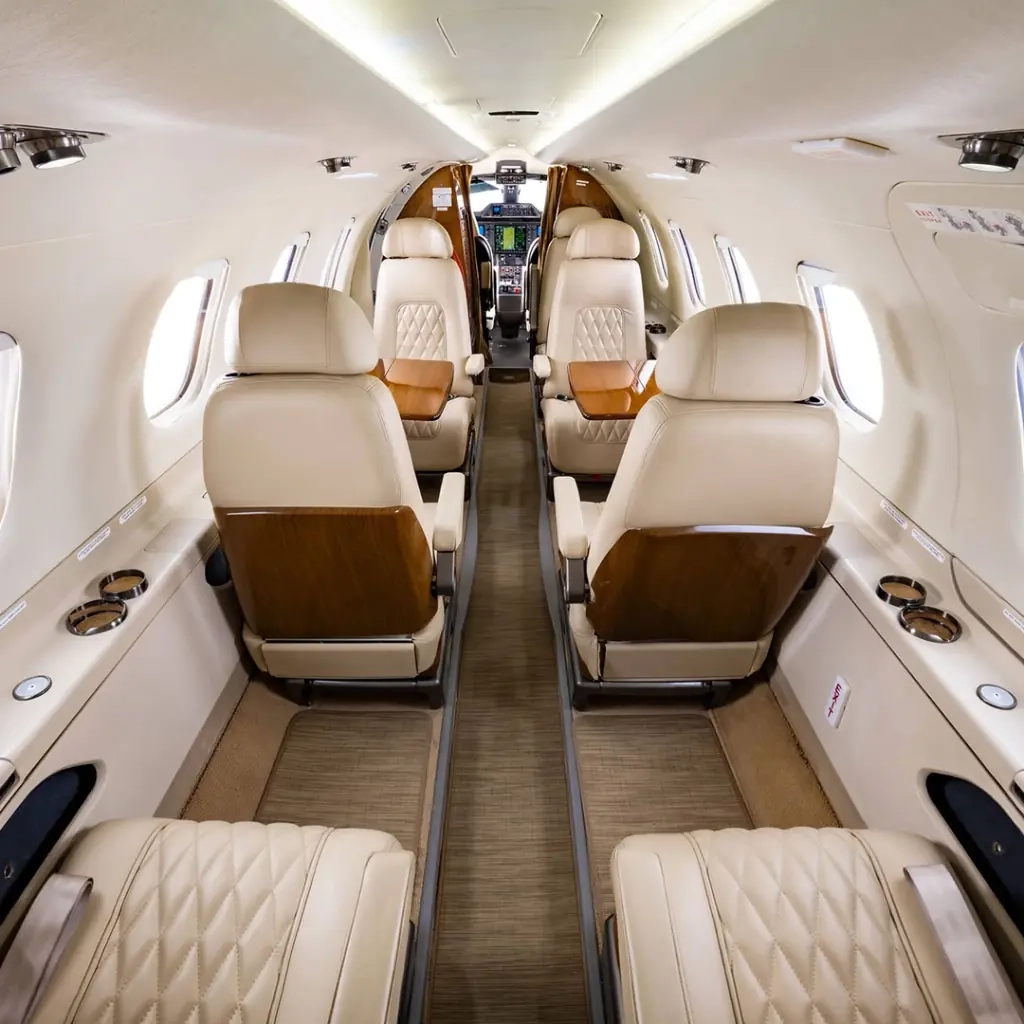
Disinsection questions, answered
What is aircraft disinsection?
Disinsection is the treatment of an aircraft cabin to kill insects — chiefly mosquito vectors — required by many countries under the WHO International Health Regulations and ICAO Annex 9 to prevent the spread of dengue, Zika, malaria and yellow fever. A certificate is required on arrival.
Do you offer disinsection outside the region?
Yes. Disinsection is a nationwide, mobile service — we come to your aircraft anywhere in the US, separate from our regional detailing coverage. We handle all travel logistics on our end.
Which method do you use?
We perform certified residual disinsection using a Permethrin 2% solution applied at the WHO-recommended rate with a compression sprayer. A single treatment protects for up to 60 days, and you receive a full WHO-compliant documentation package.
Which countries require disinsection?
Destinations that commonly require it include Italy, Australia, Greece, New Zealand, Jamaica, Chile, Fiji, Barbados, Malaysia, the Cook Islands and Egypt — we provide the specific documentation each one requires, and confirm the current rules for your route before treatment.
How long does a treatment last, and can it cover multiple trips?
Residual disinsection is valid for 60 days from the date of treatment. One treatment covers every international departure inside that window — including dual Australia / New Zealand itineraries when timed correctly.
Is the treatment safe for passengers and crew?
Yes. Permethrin 2% is confirmed safe for aircraft cabin use by the World Health Organization. The cabin is empty during application, the aircraft is ventilated before boarding, and there is never any in-flight spraying.
Does the aircraft need to be empty?
Yes — all passengers and crew must be off the aircraft during treatment, per WHO requirements. The spraying itself takes five to twenty minutes on most business jets, followed by a short set time.
What do authorities actually check on arrival?
Health officials look for the WHO Certificate of Residual Disinsection recording the treatment date, product, method and technician. Australia and New Zealand also require their Appendix A form, and Greece requires disinsection details in the General Declaration — all covered in the package we issue.
How much lead time do you need?
A week is ideal; within driving range we can typically reach your ramp in one to two days, and two to three days where flying is required. Tight departure? Call us — urgent timelines are often workable.
Can you perform residual disinsection for Australia or New Zealand?
Yes — under your operator approval. Australia and New Zealand accept residual disinsection only when performed under a formal arrangement the airline or charter company holds with DAFF or MPI; providers cannot hold the approval themselves, but approved operators can subcontract the work to us as their listed contractor. This is set out in the Schedule of Aircraft Disinsection Procedures for Flights into Australia and New Zealand, V5.3. If you aren’t approved yet, we’ll partner with you and provide everything needed to obtain the certification — and MPI answers AU/NZ disinsection questions at DisinsectionMatters@mpi.govt.nz.